Antizuck App Detects Nearby Meta Smart Glasses via Bluetooth
Antizuck is a $2.99 iPhone app that scans Bluetooth signals to detect nearby Meta glasses and other smart eyewear. Its detection range is limited to specific de

Key Takeaways
- Antizuck is a new app that scans local Bluetooth signals to detect nearby smart glasses and headsets.
- The app can only detect Meta glasses when they are powering on, charging, or actively pairing, rather than continuously while they are in use.
- Antizuck is currently only available for iPhone; an Android version is in the works.
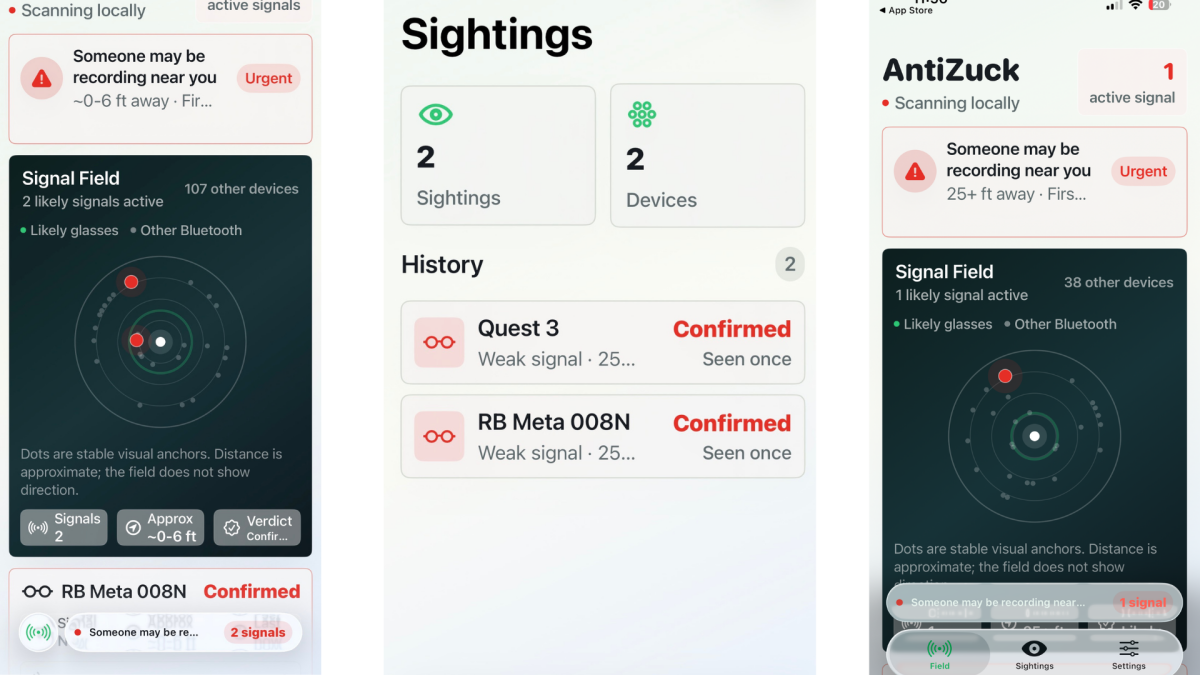
An app has launched that detects whether the people around you are using Meta and other kinds of smart glasses. Antizuck Smart Glasses Scanner, available for iPhone and designed by Albert Pariente Cohen, detects nearby Bluetooth signals that match Meta glasses, Snap Spectacles, Meta Quest headsets, RayNeo smart glasses, and other devices; then, it lets you know what gadget is nearby and whether it’s been detected previously. In keeping with its privacy focus, Antizuck doesn’t require an account or email address, nor does it send any data outside of your phone. It retails for $2.99 with no subscription.
What Devices Can the Antizuck App Identify?
In testing, Antizuck successfully identified both Meta glasses and a Quest 3 headset. It called out the Quest 3 by name and distance while the headset was in sleep mode. The Meta glasses, though, weren’t as easily detected. While it did find the glasses, it only “saw” them when they were turned off and on: Antizuck only detects Meta glasses that are charging, powering on, or actively pairing.
The app can also show you all the other Bluetooth devices advertising around you, identifying what they are where possible. Interestingly, it identified a pair of charging Even Realities G2 smart glasses but didn’t flag them, presumably because they don’t have a camera. Even so, seeing how many devices are broadcasting around you is worth the $3 price of admission.
How Useful Is the App for Spotting Nearby Recording?
It’s clear from the app’s “glasses spotted” warning — “Someone may be recording near you” — that the intent is to alert you if someone nearby might be recording, but the app is only marginally useful for that purpose. It does not identify which passersby are wearing Meta glasses, does not alert you when a nearby pair of glasses starts recording or takes a picture, and does not notify you when a nearby pair of Meta glasses is transferring media to a phone. If someone turns on their glasses near you or charges them for three minutes or so, you’ll get a ping and a record of whether that same pair of glasses has been detected by you before. But most people aren’t charging their glasses on a street corner or in a bar.
Utility aside, the app is clearly part of the growing backlash against camera-equipped smart glasses, whether it’s New York banning them in court or singer Lorde calling them “not sexy.” The concern people — particularly women — have about being recorded by hidden spy glasses is understandable, but the argument isn’t entirely one-sided. People with vision problems use Meta glasses to get verbal assistance from AI. Birdwatchers use them to identify birds on the fly. Others use them to categorize receipts for tax purposes, listen to music, or take videos on bike rides. Just as it’s legal to take photos in public places, it’s legal to scan your surroundings for Bluetooth signatures — and whether either constitutes an invasion of privacy depends largely on intent. Like any tool, what makes it problematic is how it’s used.